In-season communication guide

How to talk to your child's coach without making it defensive

Before demanding a meeting or assuming the worst, slow down, gather observations across multiple trainings and games, separate emotion from evidence, and ask questions that create clarity.

Before you contact the coach

Quick principles

  • One game is not a full pattern.
  • Observe first, then ask.
  • Start with curiosity, not accusation.
  • Focus on development, role, and next steps.
  • Use calm, specific questions.

Observe

Use patterns from multiple sessions.

Ask

Use curiosity and specific questions.

Track

Follow up over 30 days.

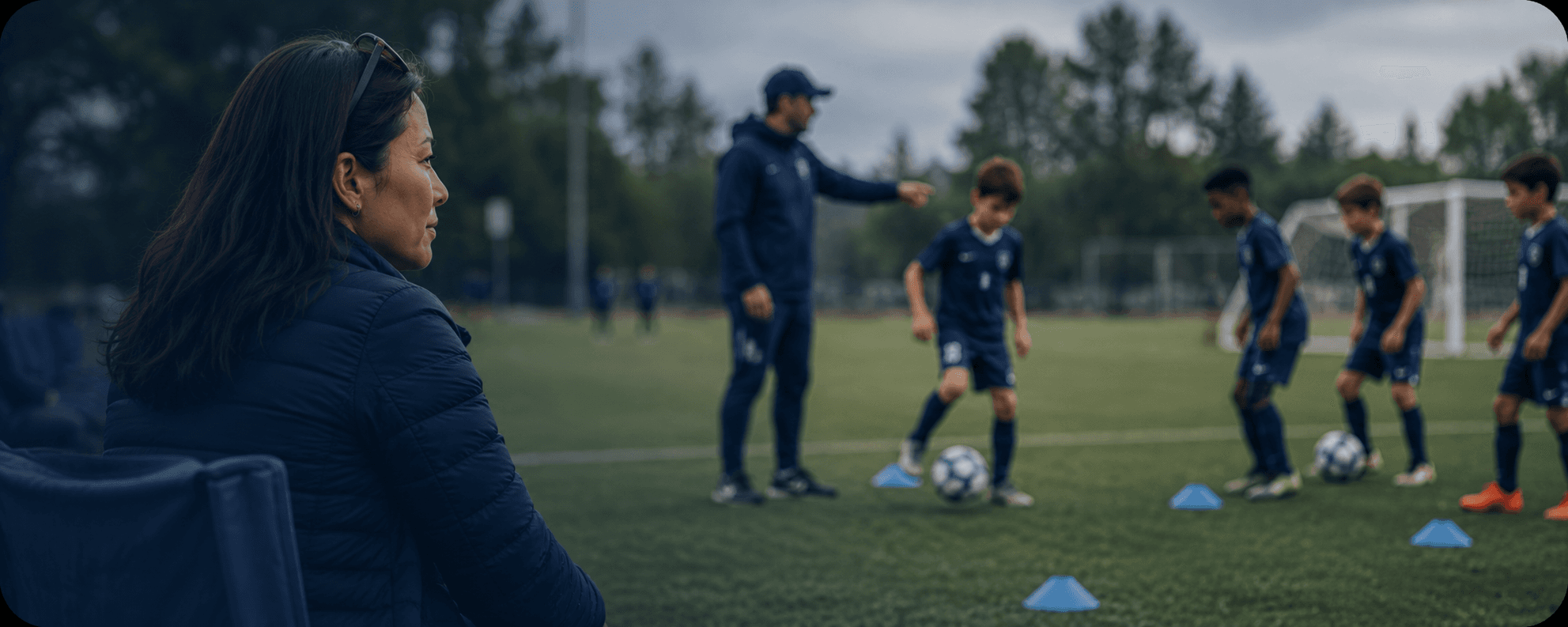
Parent observing from the sideline while players train in the background

Calm sideline observation

Observe patterns before starting the conversation.

1) Why coach communication gets emotional

Parents care deeply about their child, so unclear feedback, changing roles, or reduced minutes can trigger emotional reactions. Acknowledge that feeling, then move toward calm facts and useful questions.

2) Do not turn one game into a final conclusion

Avoid demanding a meeting after one game, one substitution pattern, one bad weekend, or one frustrating result. Look for patterns across multiple games and trainings.

3) Observe before you ask

  • What happened?
  • How often has it happened?
  • Was it one game or a pattern across several weeks?
  • Is it showing up in training, games, or both?
  • How is your child responding?
  • What feedback has the coach already given?
  • What does your child understand about their role?

4) Separate emotion from evidence

Emotion

"I feel my child is being overlooked."

Evidence

"Over the last four games, my child played fewer minutes and has not received feedback on what to improve."

5) Start with curiosity, not accusation

Questions that invite explanation usually produce more clarity than questions that assume blame.

Avoid framing

  • Why isn't my child playing?
  • Why do you keep favoring other players?
  • What do we need to do to get more minutes?

Better framing

  • Can you help me understand what you're looking for from my child in this role?
  • What are 2-3 areas they should focus on over the next month?
  • Is there anything you're seeing in training that we may not be seeing from the sideline?
  • What would progress look like from your perspective?
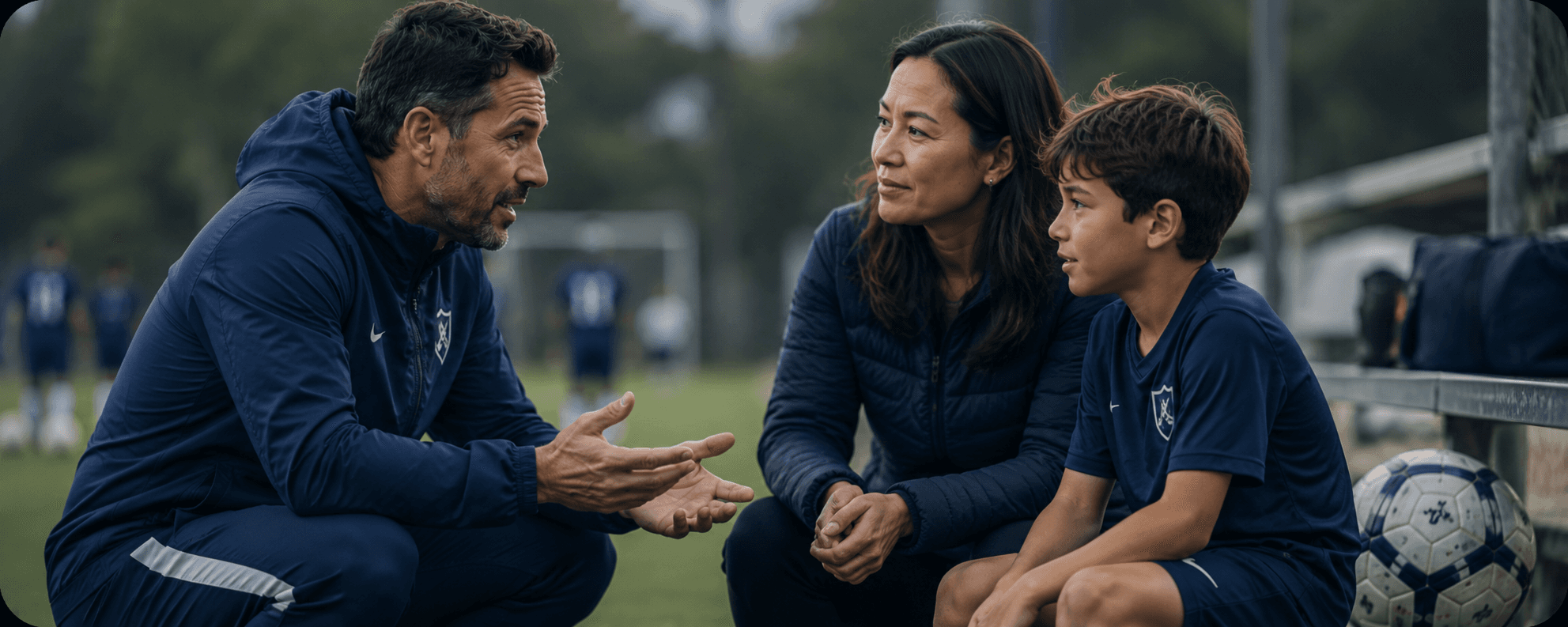
Coach and player communicating in a calm, constructive way

Conversation tone cue

Good coach conversations start with questions, not blame.

6) Timing matters

  • • Avoid approaching immediately after games, during tournament weekends, or in front of parents and players.
  • • Avoid long emotional text threads.
  • • Ask for a short scheduled conversation (10-15 minutes) focused on development, role, and next steps.

7) Ask development-focused questions

Role clarity

  • What role do you see my child competing for right now?
  • What would help them earn a bigger role?
  • Are there specific moments in games where they need to improve?

Training habits

  • How are they doing in training compared to games?
  • Are they bringing enough focus and effort to sessions?
  • What habits should they improve?

Technical / tactical development

  • What technical areas are limiting them most right now?
  • Are they making decisions quickly enough for this level?
  • What should they work on outside team training?

Playing time

  • Is their playing time connected to performance, role, fitness, training habits, or team needs?
  • What would progress look like over the next few weeks?

Team fit / pathway

  • Do you feel this level is the right challenge for them right now?
  • Are they appropriately stretched, or are they currently overwhelmed?
  • What should we be watching for before making any bigger decisions?

8) How to send the first message

Message template

“Hi Coach, I wanted to ask if we could find 10-15 minutes at some point this week to better understand where [Player Name] stands and what they should focus on next. We're trying to support their development the right way and would appreciate your perspective on their role, progress, and 2-3 areas to work on.”

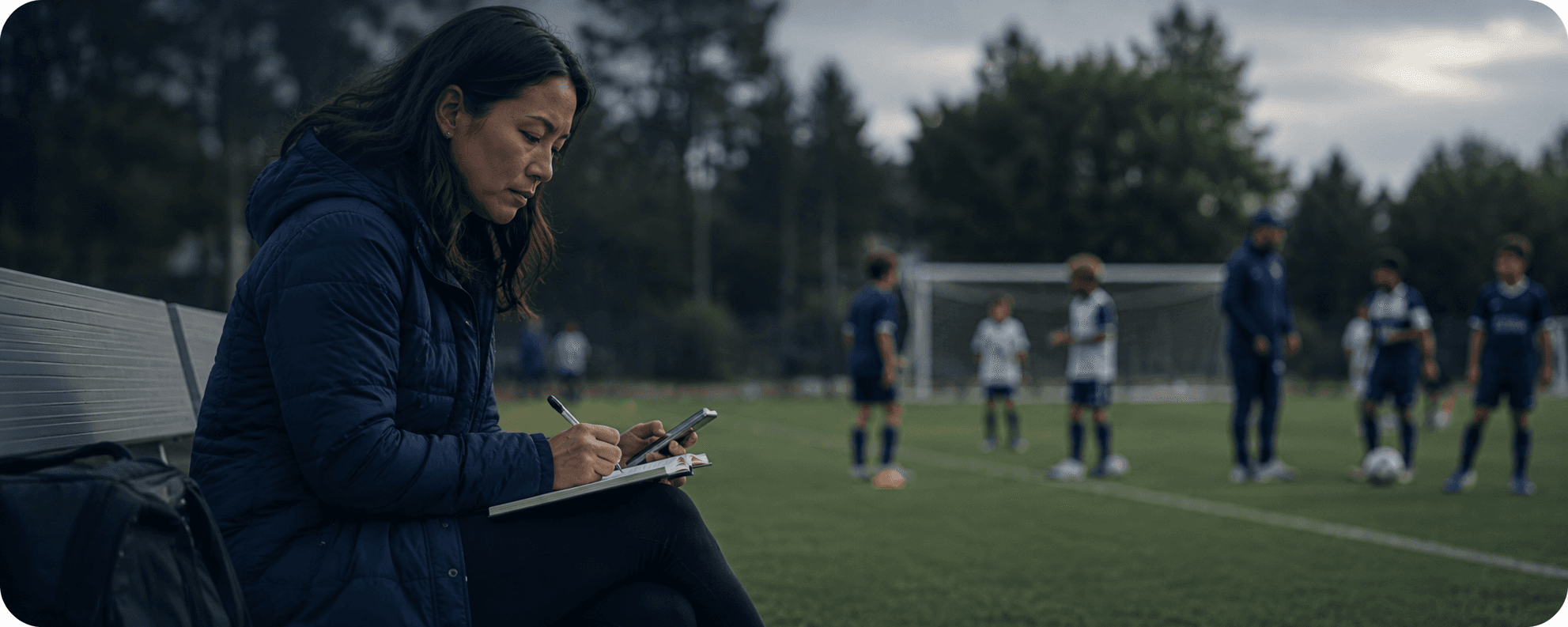
Simple checklist and notes for preparing a calm message to coach

Message prep reminder

Keep the first message short, calm, and focused on development.

9) What to do after the conversation

  • Document key feedback in plain language.
  • Write the 2-3 agreed focus areas.
  • Set a timeline for review (for example, 3-4 weeks).
  • Clarify what the player needs to own.
  • Clarify what parents should stop guessing about.
  • Track what to observe over the next month.

10) When communication is a warning sign

If calm attempts repeatedly lead to vague feedback, shifting expectations, and no clarity, communication can be a team-fit signal. Still, one poor response should not be the only reason to leave.

  • • Coach refuses any development conversation.
  • • Feedback is vague every time.
  • • Role expectations keep changing without explanation.
  • • Child is confused or disengaged.
  • • Parent has no clarity after multiple calm attempts.

11) What the parent should produce

Use this practical output before making bigger decisions about staying, switching, or changing expectations.

Observation notes
Concern summary
Question list
Coach message
Post-conversation next steps
30-day follow-up plan
Parent review

Still unsure after using the tools?

Request a Parent Pathway Review for a structured second look before you accept a roster spot, switch clubs, or pay a deposit.

Request a Parent Review